Ethiopia Dialogues on Progress Towards Building a Competent, Responsive, and Equitably Distributed Health Workforce for Universal Health Coverage
Addis Ababa, Ethiopia – 18 February 2026 – The Federal Ministry of Health, in collaboration with the Ministry of Education and with technical support from the World Health Organization (WHO), has launched a series of High‑Level Multisectoral Dialogues focused on aligning national priorities, investments, and policies for health workforce development. This work is supported by funding from the United Kingdom Department for Health and Social Care (DHSC).
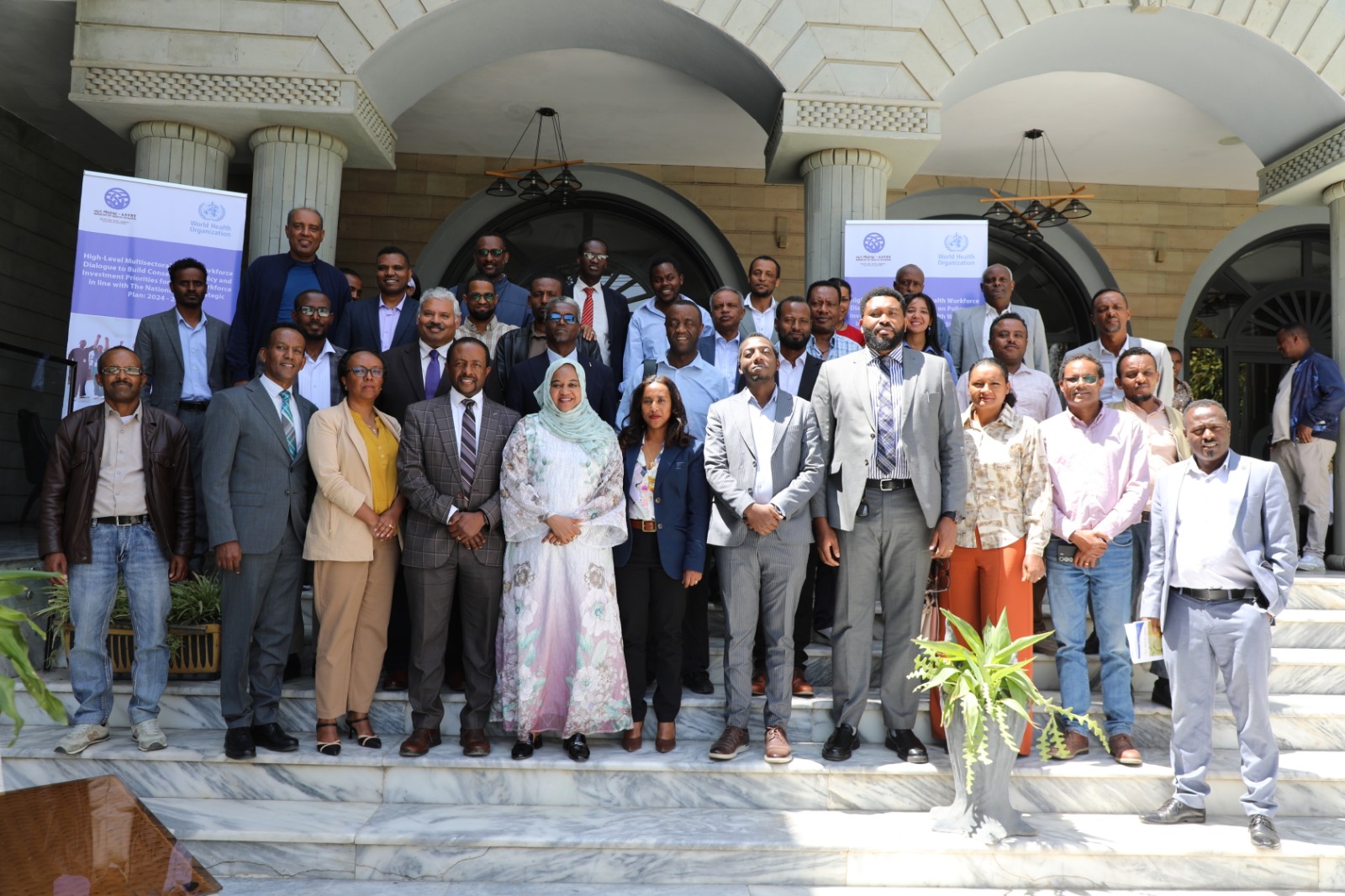
The first dialogue, themed “Progress Toward a Competent, Responsive, and Equitably Distributed Health Workforce for UHC in Ethiopia,” brought together senior policymakers, training and accreditation bodies, global health partners, and leaders from across the health, education, and finance sectors. The dialogue examined Ethiopia’s progress toward its Human Resources for Health (HRH) Strategic Plan 2024–2030 and reaffirmed the country’s commitment to building a health workforce capable of delivering quality care to all communities.
Over the past decade, Ethiopia has significantly expanded its health workforce, scaling health training institutions, enhancing licensure systems, and pioneering the formalization of community health workers through the Health Extension Program and health workforce investment compacts.
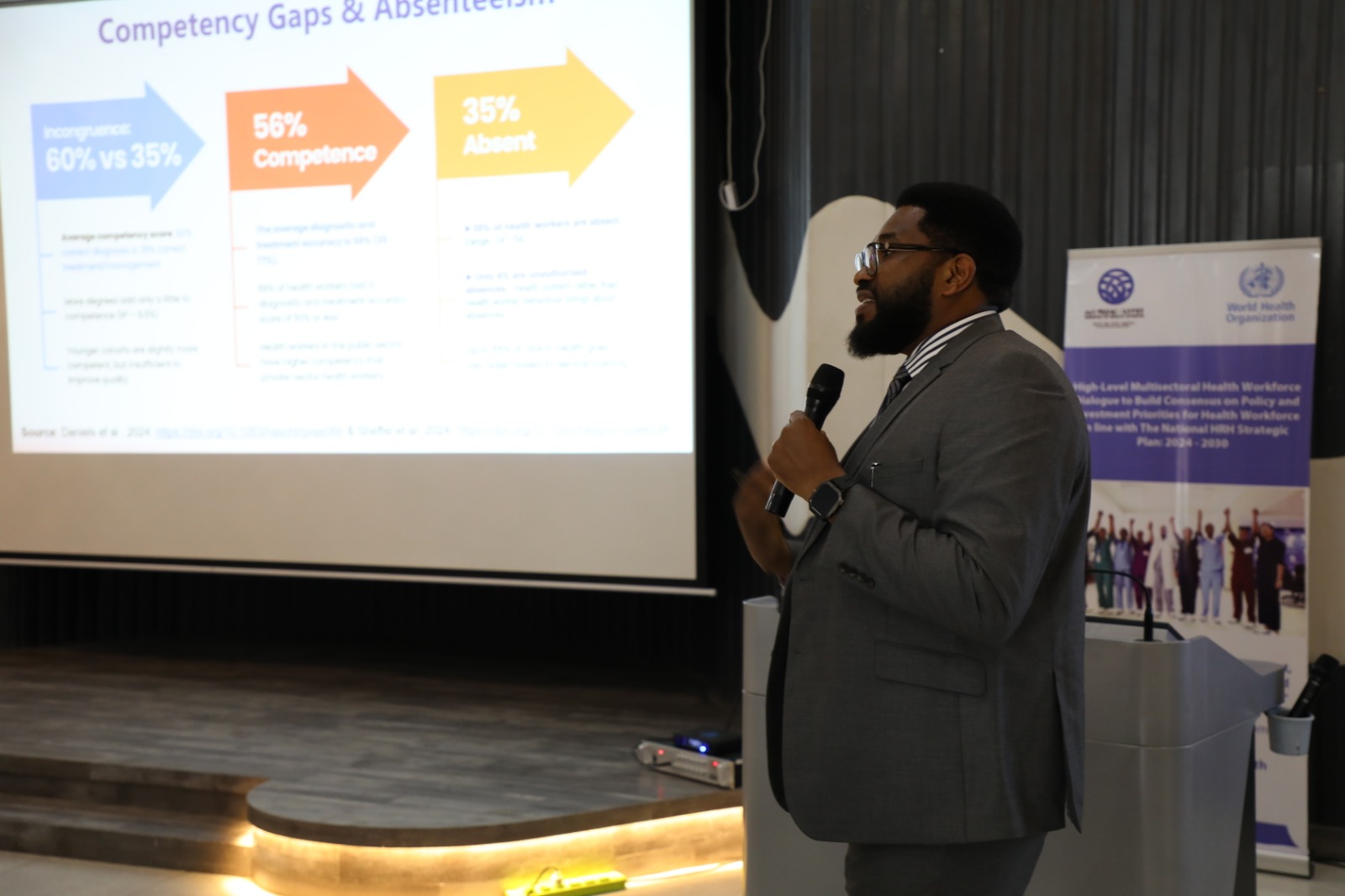
However, despite these important gains, persistent challenges remain. Gaps in workforce quality, inequitable distribution, fiscal space limitations, productivity concerns, and rapid shifts in service delivery needs continue to place pressure on the health system and threaten progress toward UHC.
The dialogue highlighted that achieving UHC will require coherent multisectoral action, data-driven decision‑making, and sustained investment in health workforce development across the entire labor market cycle, from production to employment, performance management, and retention.
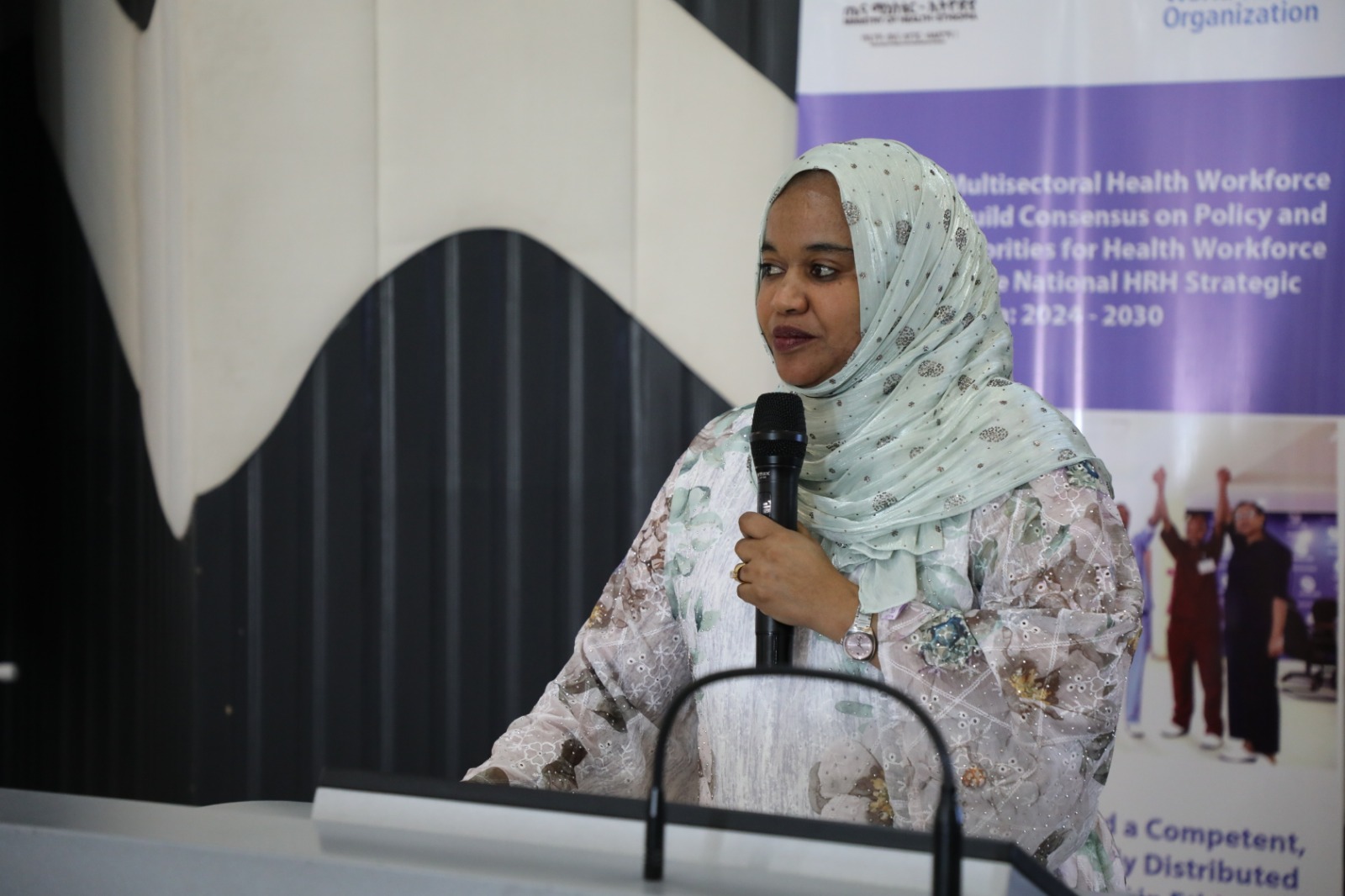
H.E. Mrs. Seharela Abdulahi, State Minister of Health mentioned that “This dialogue is not an exercise — it is a commitment. Ethiopia has made real progress in expanding training, opening new schools, and improving licensure systems, but we must be honest that significant gaps remain in the number, distribution, and performance of our health workforce. To address these challenges, we need stronger health financing, multisectoral engagement, coordinated leadership, and harmonized policies. By grounding our decisions in evidence and turning today’s dialogue into sustained action, we can make health workforce strengthening a national culture. Strong health systems require a strong health workforce.”
The High‑Level Multisectoral Dialogue on Health Workforce Investment was guided by clear objectives:
• to review Ethiopia’s current health workforce landscape,
• identify priority reforms,
• strengthen multisectoral coordination,
• inform the expansion of the Health Workforce Investment Compact, and
• mobilize political and financial commitments for sustained workforce development.
Stakeholders reflected on achievements while also acknowledging the need for further action to improve employment pathways, motivation, and retention. Through collaborative deliberation, they identified key areas for investment and reform to ensure that Ethiopia’s health workforce is well‑prepared to meet evolving population health needs.
A central theme throughout the discussions was the importance of strengthened coordination between the Ministry of Health, Ministry of Education, Ministry of Finance, and regulatory and training institutions. The dialogue provided a platform to explore how Ethiopia can more effectively operationalize its Health Workforce Investment Compact and ensure that future investments are grounded in evidence, aligned to national realities, and supported by shared accountability.
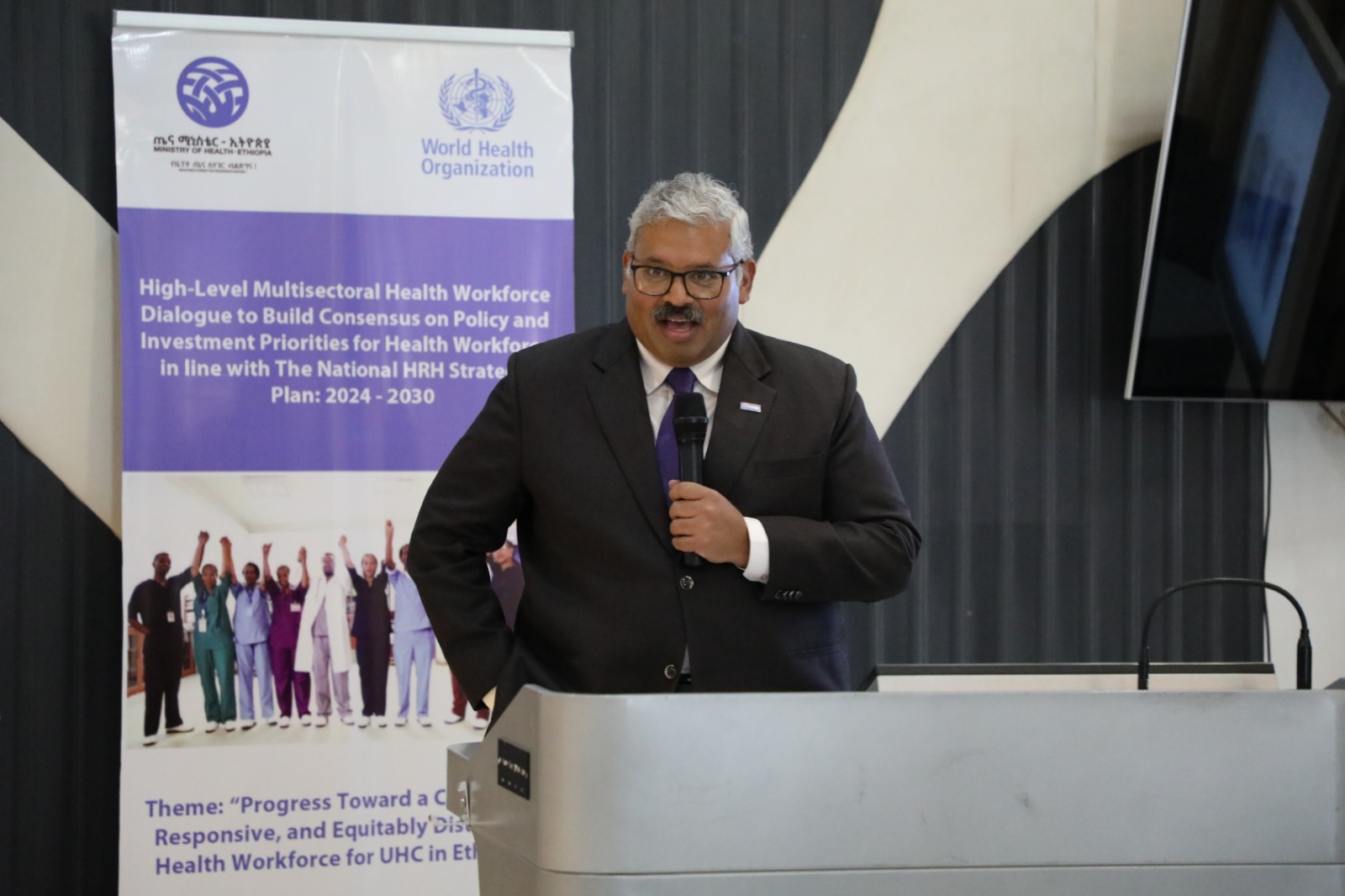
“WHO is keen to support Ethiopia in this important dialogue on Human Resources for Health, which is helping build a shared understanding of the current health workforce context and the strategic actions needed to strengthen development, retention, and investment for the future,” said Dr. Bejoy Nambiar, Health Systems and Policy Advisor, WHO Ethiopia.
Ms. Susan De, Deputy Director of Health and Nutrition, Health Systems Strengthening – Ethiopia, at the Bill & Melinda Gates Foundation, also highlighted, “The health workforce ecosystem is complex; it requires a team effort, cross-sectoral partnerships: Ministries of Health, Education, Finance, professional bodies, donors.”
The series would continue with subsequent dialogues, which would focus on identifying concrete financing strategies and resource pathways to support sustainable workforce investments and co‑creation of Ethiopia’s Health Workforce Investment Compact III, translating policy priorities into actionable, accountable commitments.
Together, these dialogues represent a coordinated national effort to ensure that Ethiopia’s health workforce remains at the heart of efforts to build a resilient, equitable, and high‑performing health system for all.
World Health Organization -Ethiopia
Phone: +251911080478 (Direct line, WhatsApp & Telegram)
Email– yfita [at] who.int (yfita[at]who[dot]int)